
After more than five decades of travel, it took a great deal to surprise me. Airports blurred together. Hotel rooms became interchangeable. Every so often, however, a place slipped past that growing sense of familiarity, and reminded me why I began travelling in the first place. The Galápagos Islands did exactly that.
Floating nearly 1,000 kilometres west of Ecuador, the volcanic archipelago felt detached from the modern world. Nature still dictated the rhythm of life there. Sea lions slept on benches beside walking paths. Marine iguanas crawled across black lava rock like prehistoric leftovers. Birds stared at humans with complete indifference, because fear never properly evolved on islands with few natural predators. Ironically, humans eventually became the problem.
The same islands that inspired Charles Darwin who struggled against invasive species introduced through exploration and settlement. Rats, mice, ants, goats, and aggressive plant life, continue to threaten ecosystems that evolved in near isolation for thousands of years. Conservation programs were visible everywhere, and tourism was carefully controlled, yet the balance between preservation and economic survival remained delicate.
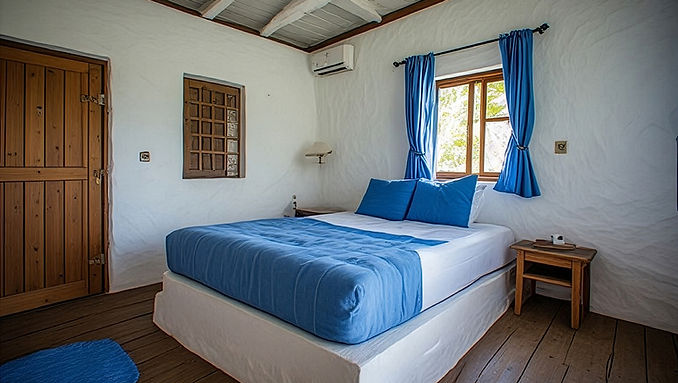
I arrived on Santa Cruz Island after a flight from Quito, and checked into a modest hotel in Puerto Ayora. Most visitors experienced the islands aboard cruise ships, so land-based accommodations tended to be practical rather than luxurious. My room was simple, but pleasant. White walls, blue trim, a ceiling fan clicking lazily overhead, and enough space to unpack camera gear.
After tossing my bag onto the bed, I noticed an ant crawling across the wall. One ant quickly became several. Within minutes, a steady procession marched across the ceiling, along the floor, and directly over the bedspread with military precision. The front desk manager responded with an apologetic smile, before producing an insecticide sprayer that appeared old enough to qualify as something from Scugog Shores Museum. Back upstairs, chemical warfare began.
Apparently, environmental regulations regarding aerosol strength had not entirely reached the middle of the Pacific Ocean. Within seconds, both the ants and I were struggling to breathe. Retreat seemed wise. Dinner fortunately restored my mood. Fresh seafood arrived beautifully prepared, and the service proved surprisingly refined for such a remote location.
Later that evening I cautiously re-entered the room. The ants appeared gone, although the air still felt powerful enough to remove paint. Satisfied the battle had been won, I prepared for sleep. Then another ant crawled across the ceiling directly above my head. That ended the experiment.
A second room was arranged after a polite, but determined discussion with the manager. This room resembled a bunker. Cracks appeared sealed, gaps eliminated, and even the bedframe enclosed in stucco-covered drywall. Sleep finally arrived.
Over the next several days, however, the islands worked their magic.
Blue-footed boobies performed awkward courtship dances across rocky shorelines. Giant tortoises lumbered slowly through misty highlands with prehistoric dignity. Offshore, snorkelling felt less like swimming in the ocean and more like entering a living aquarium. Sea lions twisted through the water with astonishing speed and curiosity, before darting away into the deep blue. Every island felt untouched by time. Then, late one night, came the sound of crinkling plastic. Half asleep, I switched on the bedside lamp but saw nothing. A minute later the sound returned. This time I climbed out of bed and searched carefully, eventually lifting the mattress. A small mouse stared back at me.
Another trip to the front desk followed, although this time the only staff awake were two teenage boys washing dishes in the kitchen. Verbal explanations failed miserably, so gestures became the universal language of frustration.
What followed resembled a comedy routine. Mattresses were flipped, sheets yanked free, and the boys laughed uncontrollably while chasing the tiny intruder around the room. Eventually the mouse escaped under the hallway door, and disappeared into an empty room across the corridor.
Yet despite the ants, the pesticide, and the midnight mouse chase, the Galápagos Islands remained unforgettable.
Few places still felt genuinely wild. Fewer still allowed travellers to step briefly into a world that existed long before humanity arrived. The islands offered that rare privilege with remarkable honesty.
They were a photographer’s dream, a conservation challenge, and apparently, a very comfortable paradise for mice.
Jonathan van Bilsen’s photosNtravel TV show can be watched on RogersTV and YouTube. To follow Jonathan’s travel adventures visit photosNtravel.com